LIBS Spectra of Elements
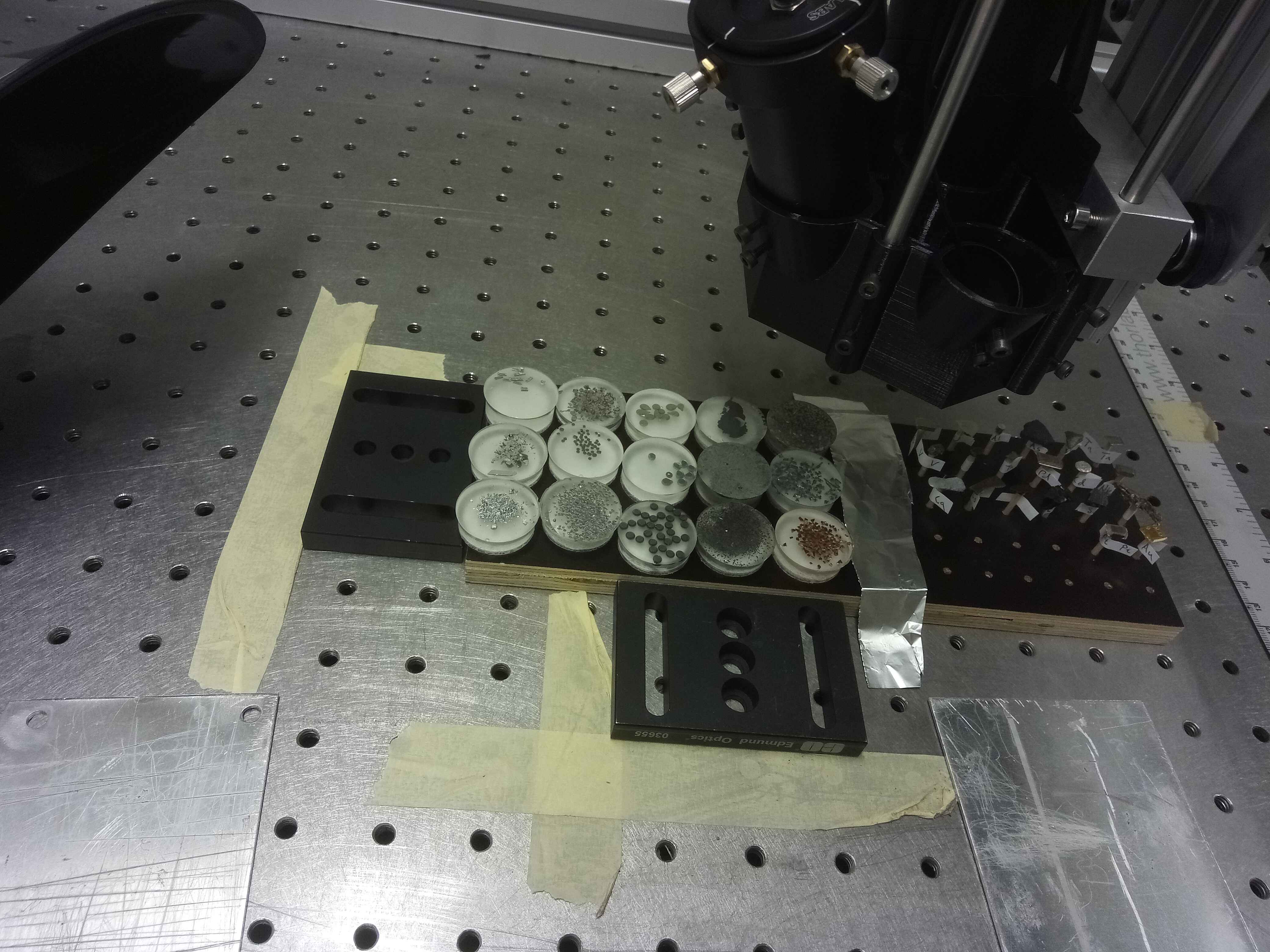
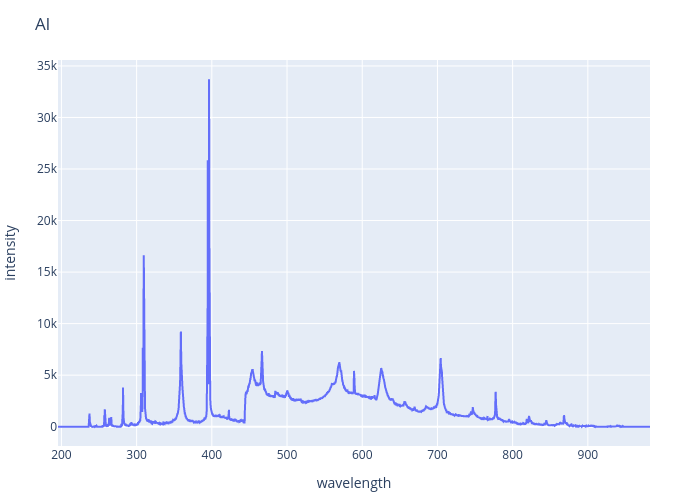
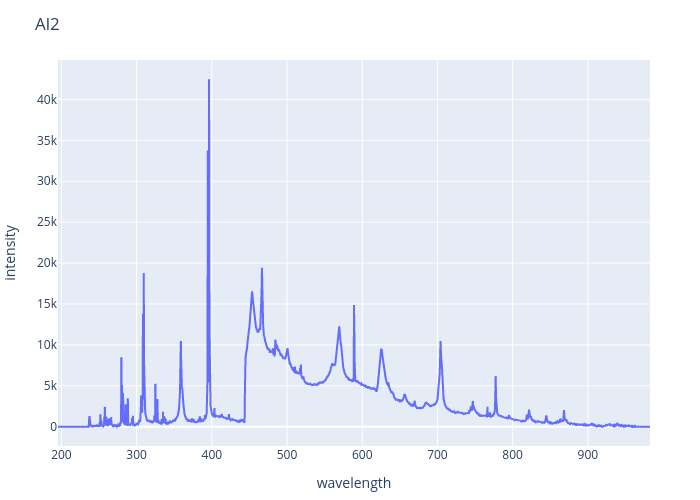
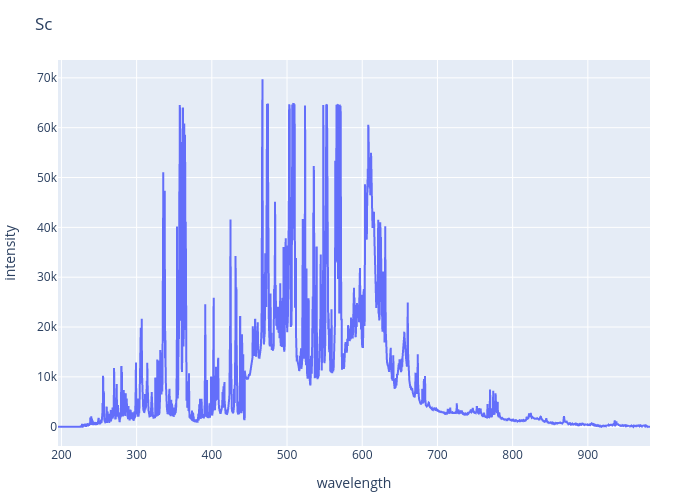
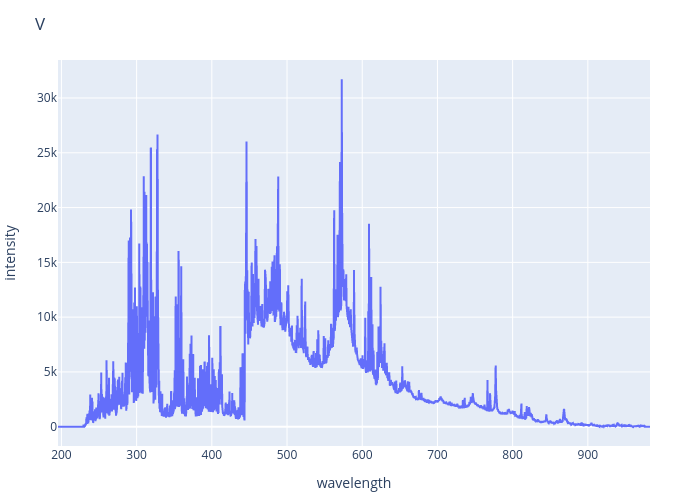
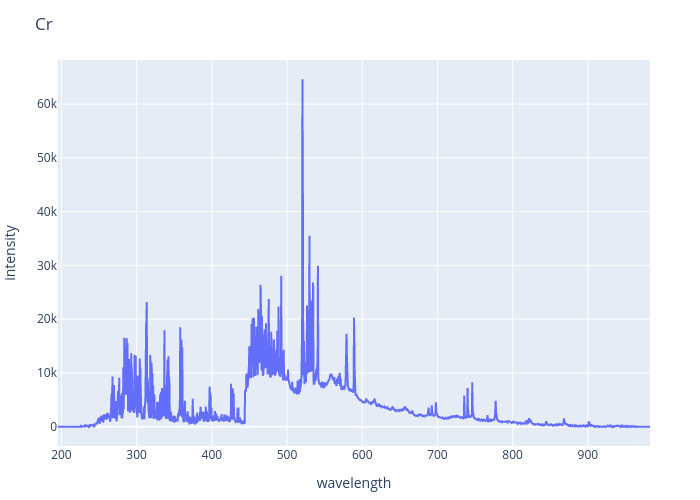
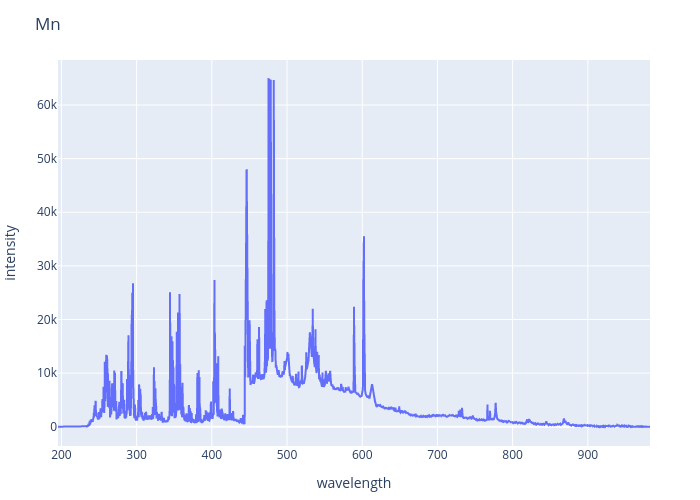
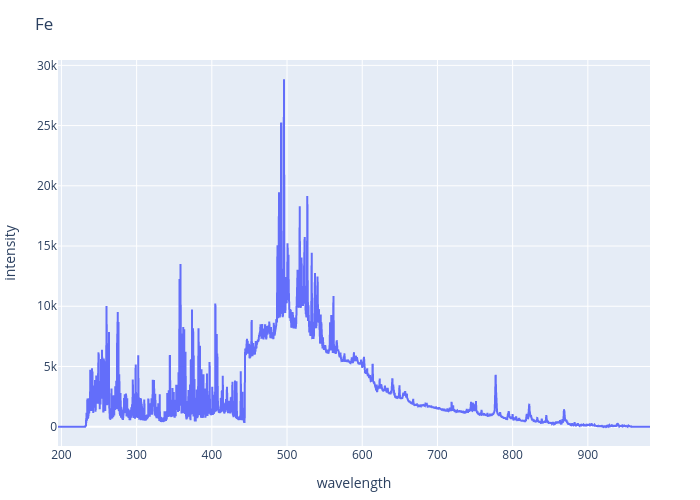
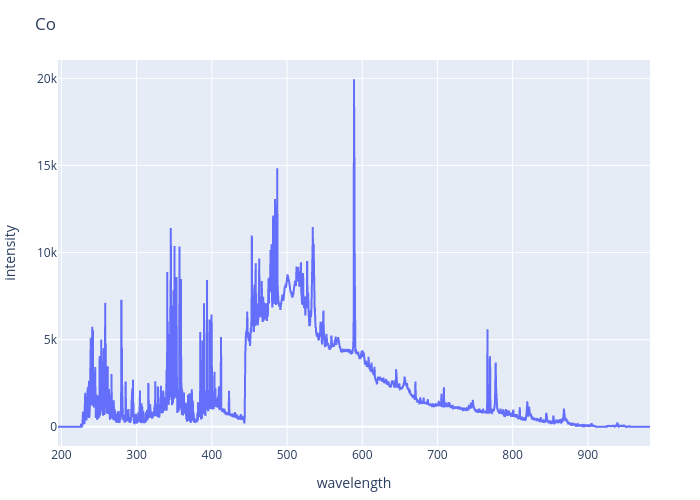
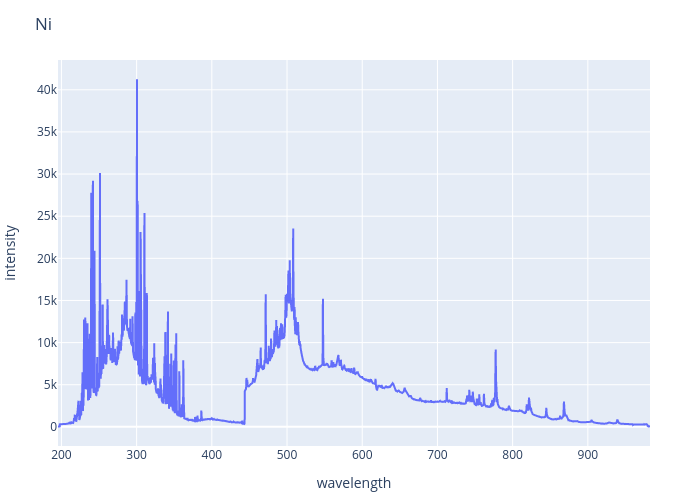
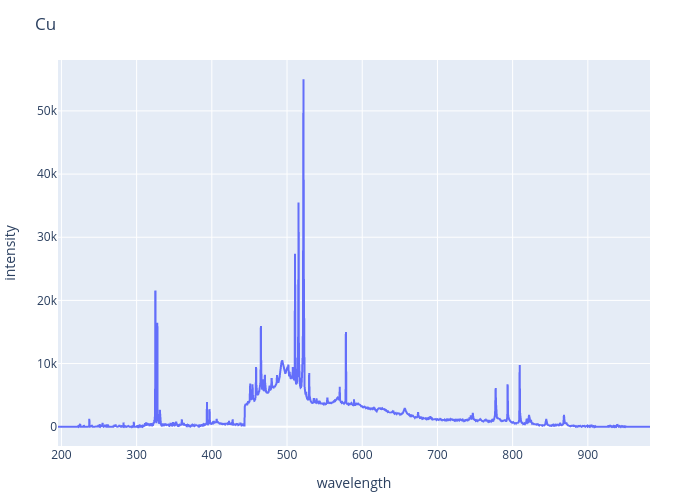
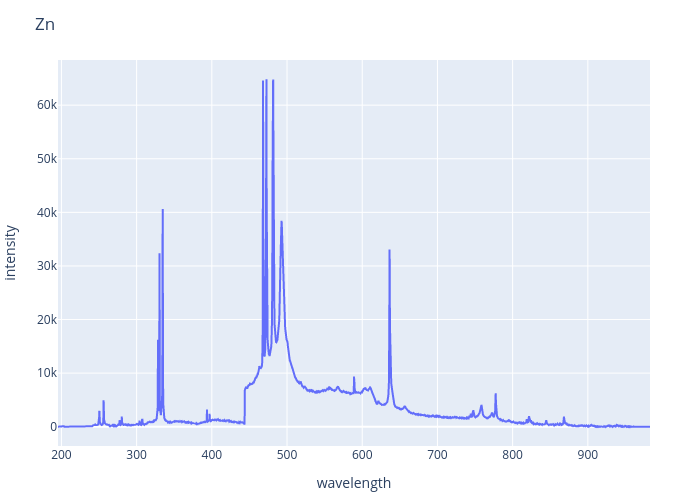
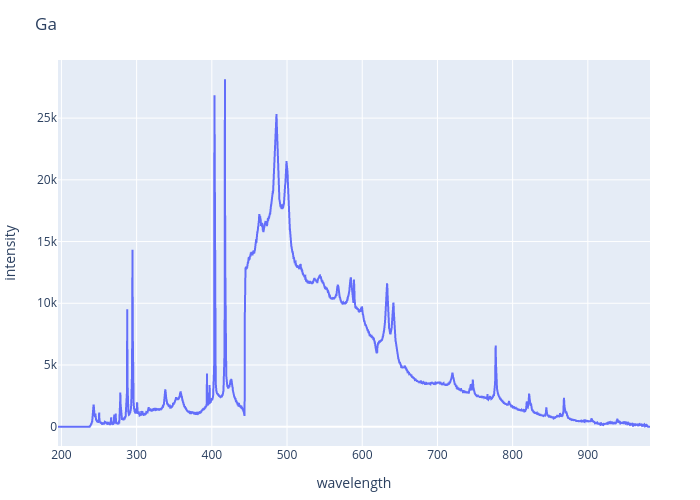
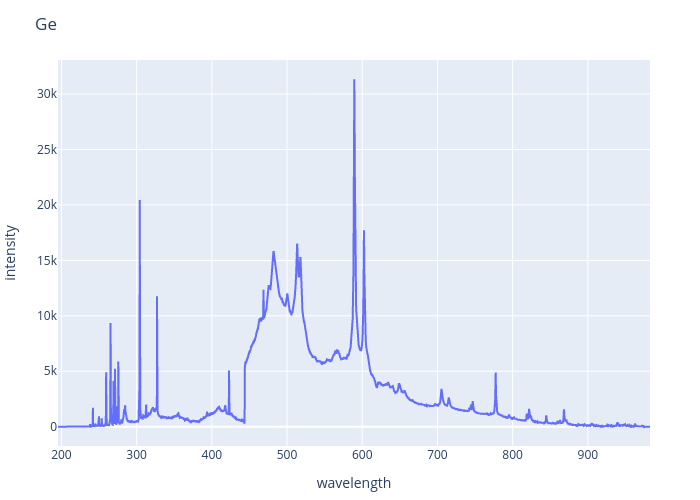
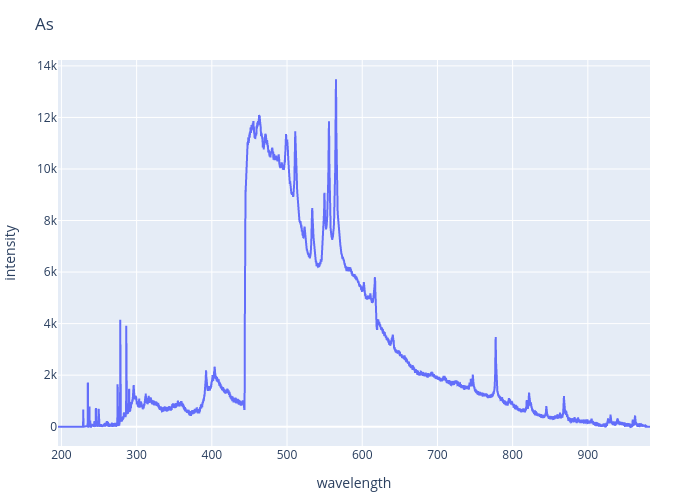
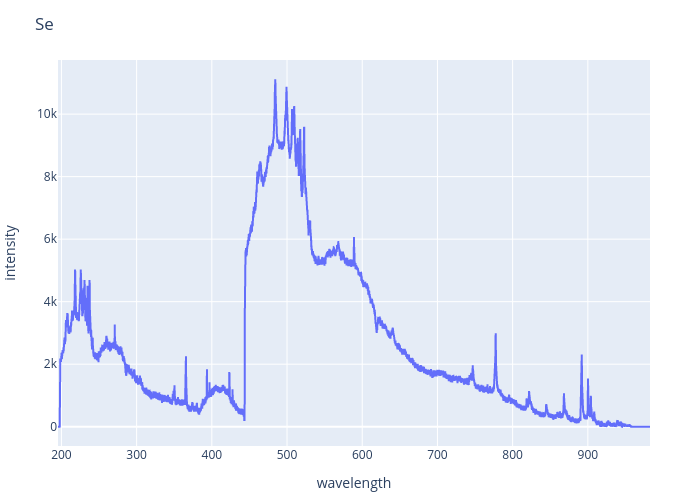
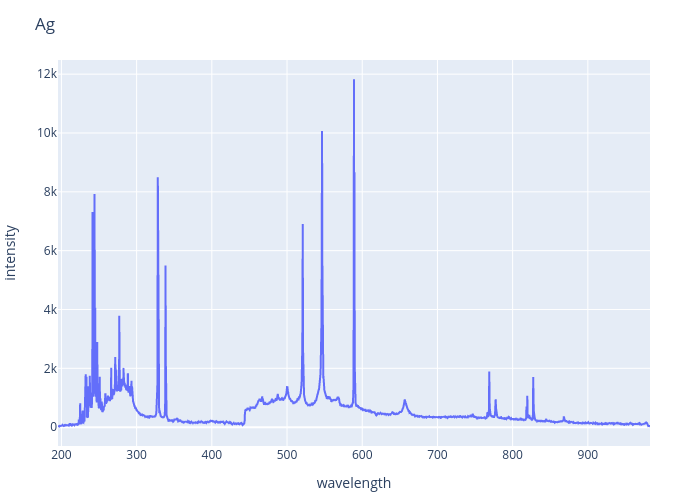
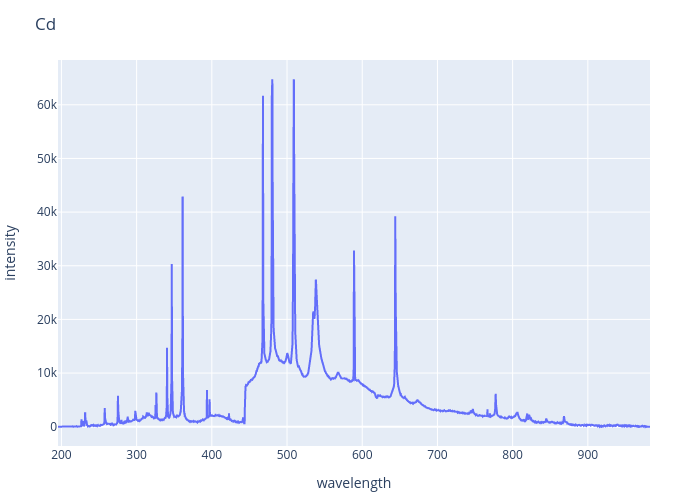
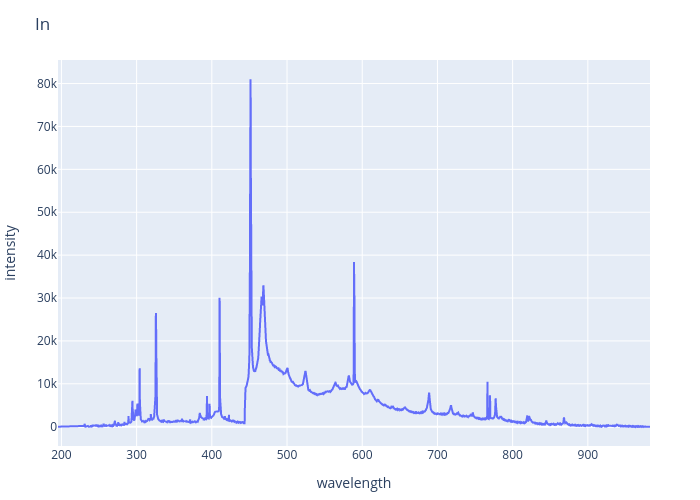
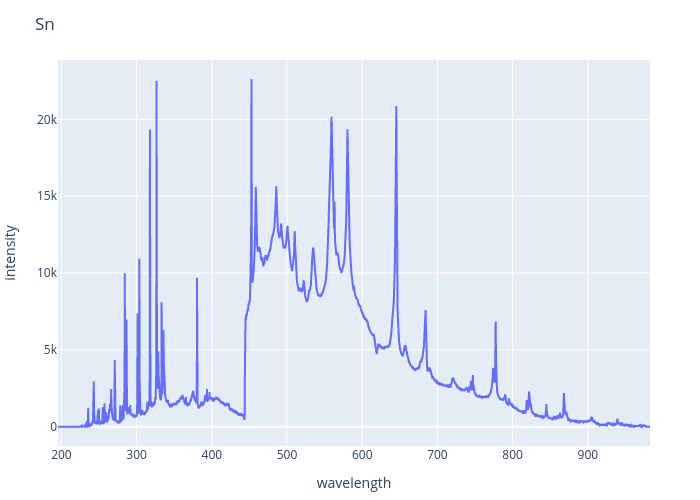
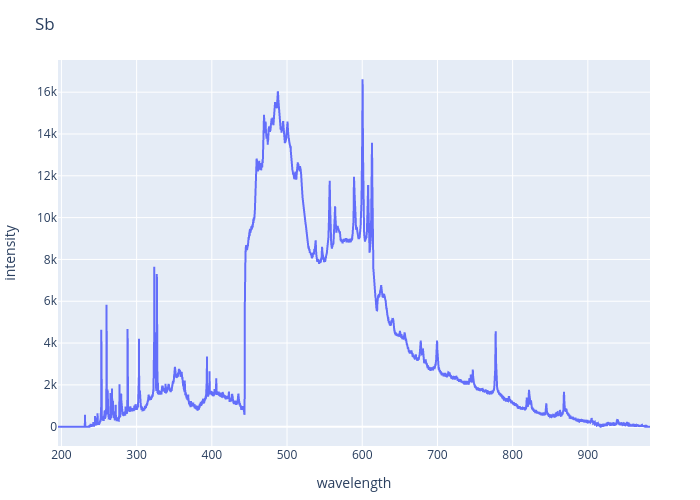
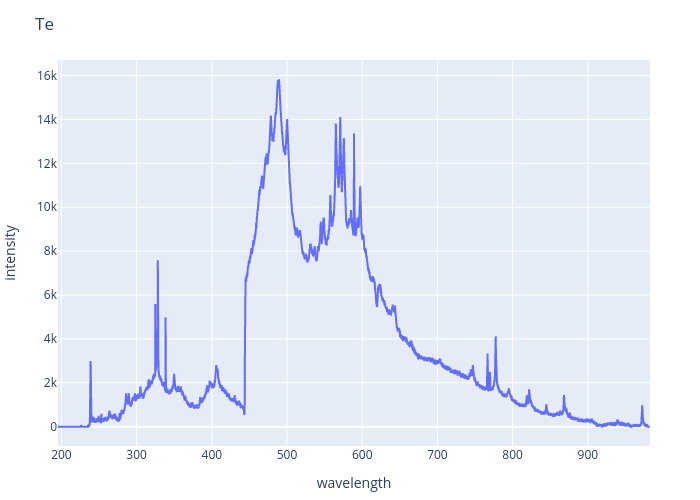
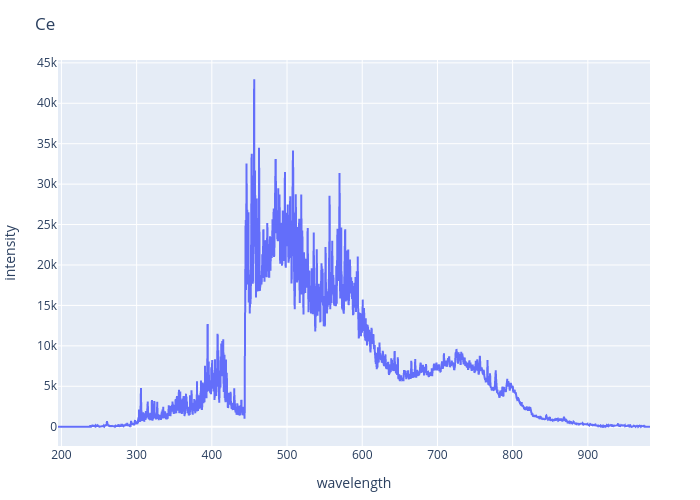
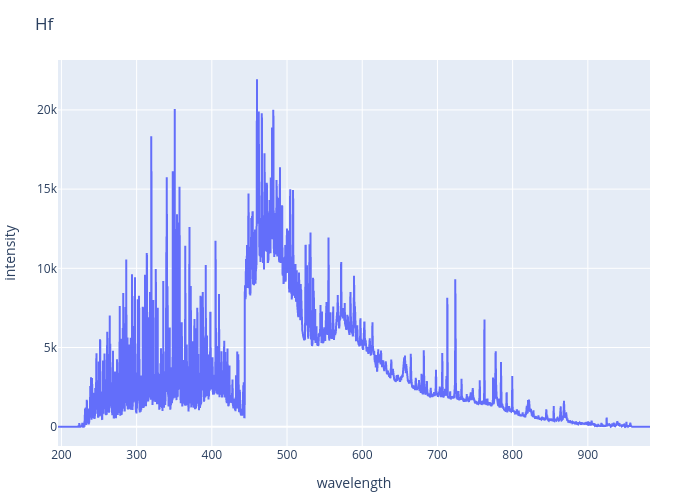
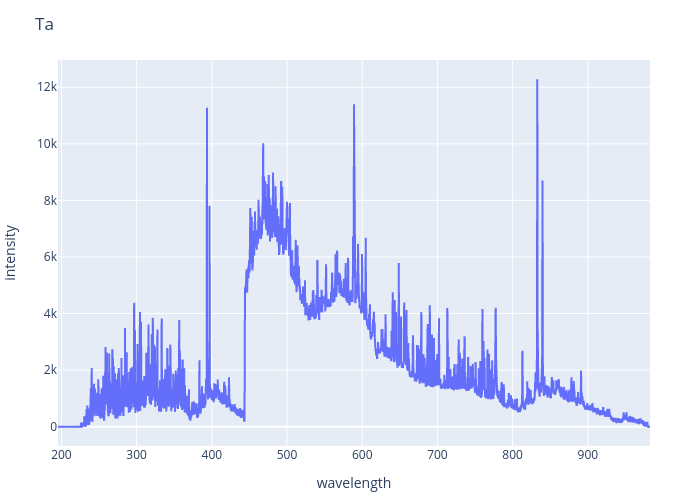
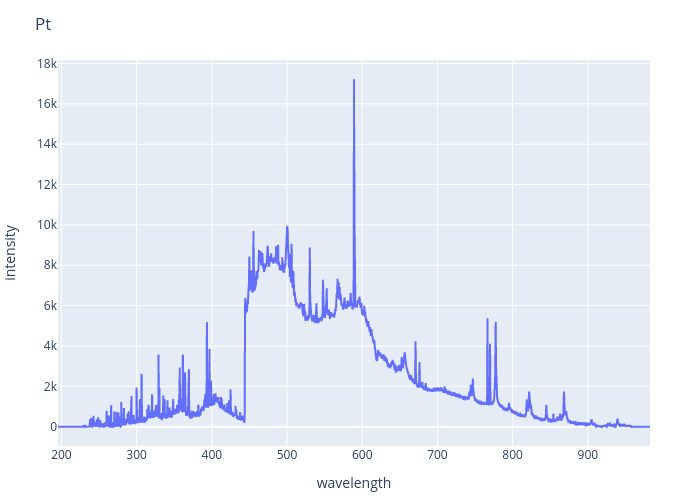
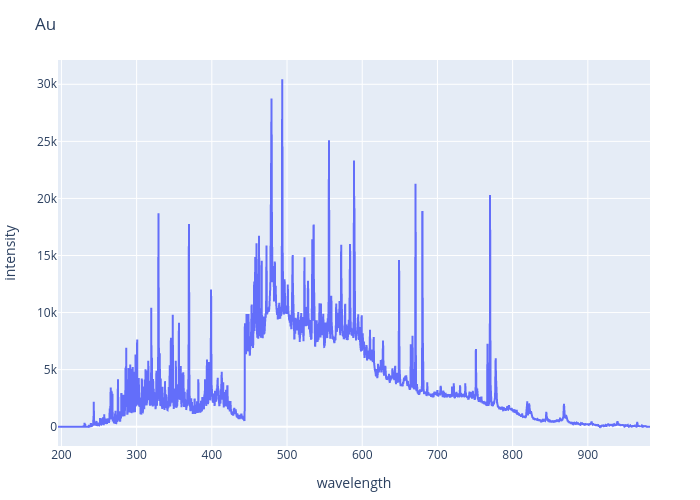
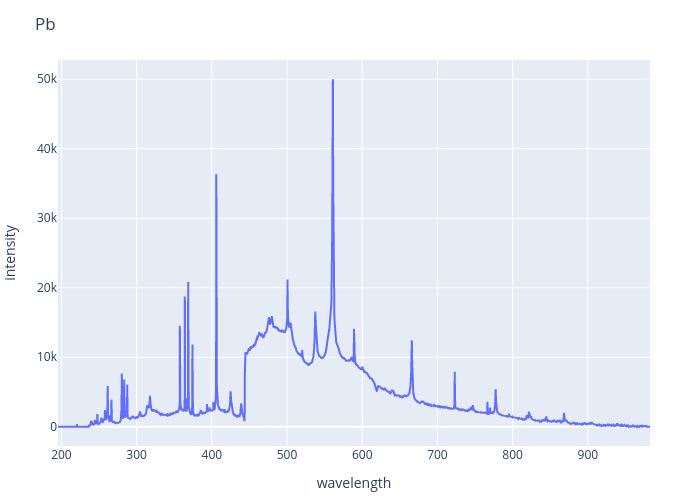
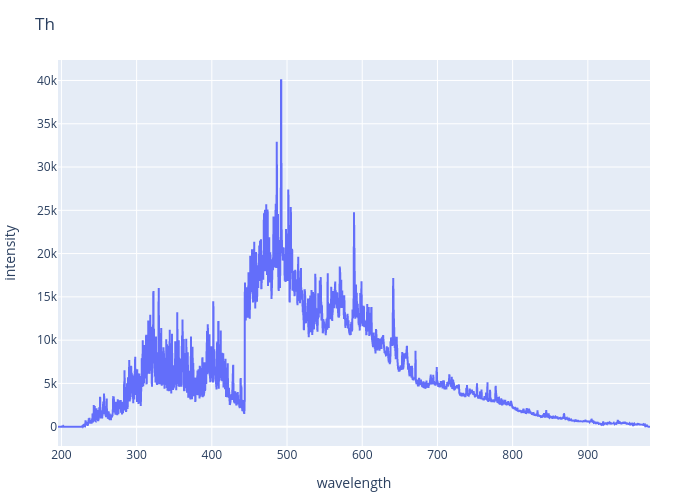
This section shows experimental LIBS spectra of many elements in the periodic table. The experimental data comes either from pure element measurements or a reference material with well known constituents. For the experimental measurement setups, see the photo below and more on LASOLIBS page component listing for details. Spectra from different sources are marked with different colors with black for pure element, red for element filtered from multielement compound and green for theoretical spectrum. Theoretical spectra are given for all naturally occurring elements including those we don't have a good experimental measurement for.
Datas
To download the datasets for your own use, see LIBS datasets.
For LIBS spectra of minerals and other materials, see LIBS spectra of Minerals .
Other good elemental LIBS databases are AromTrace elements database and NIST LIBS Database.
Theoretical spectra
The theoretical spectra are built using atomic lines data from Vienna Atomic Line Database(VALD) VALD database, operated at Uppsala University, the Institute of Astronomy RAS in Moscow, and the University of Vienna. , Kurucz linelists, Atomic line data from the Kurucz database (Kurucz 1993), downloaded from http://kurucz.harvard.du/linelists.html." and NIST Atomic Spectral Database ASD. Kramida, A., Ralchenko, Yu., Reader, J. and NIST ASD Team (2023). NIST Atomic Spectra Database (version 5.11), [Online]. Available: https://physics.nist.gov/asd. National Institute of Standards and Technology, Gaithersburg, MD. DOI: https://doi.org/10.18434/T4W30F and the equations and algorithms described at understanding LIBS spectrum page. For details about atomic line sources see atomic lines page and for details on modelling see modelling LIBS spectrum page
Elemental spectra
How are the spectra presented here
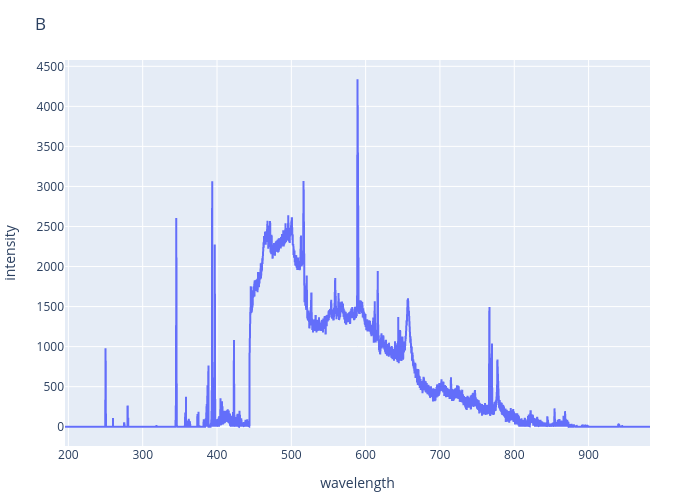
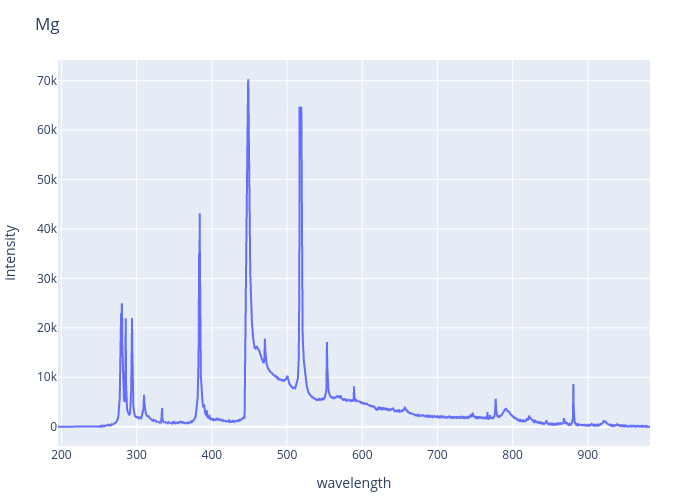
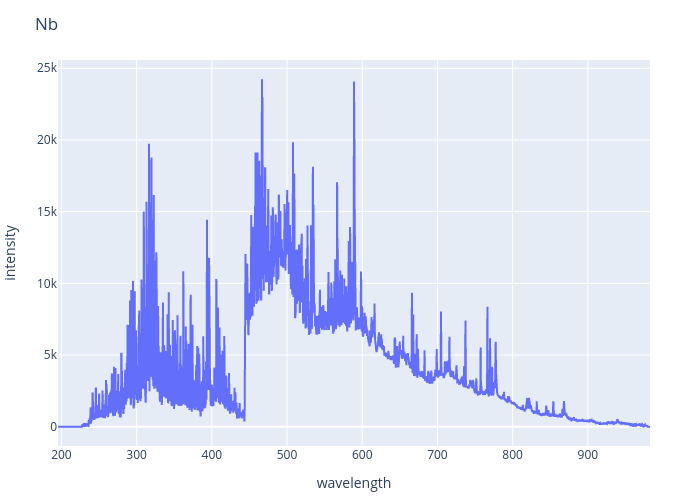
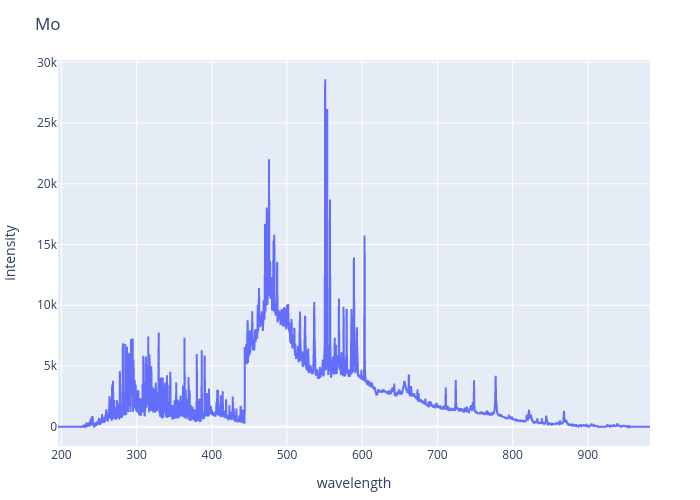
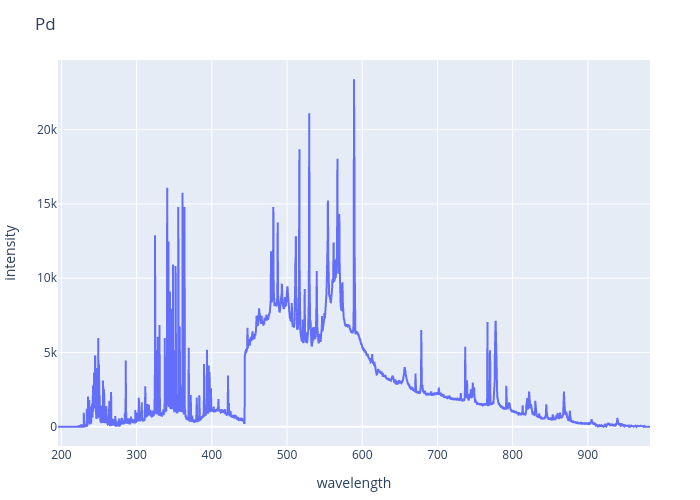
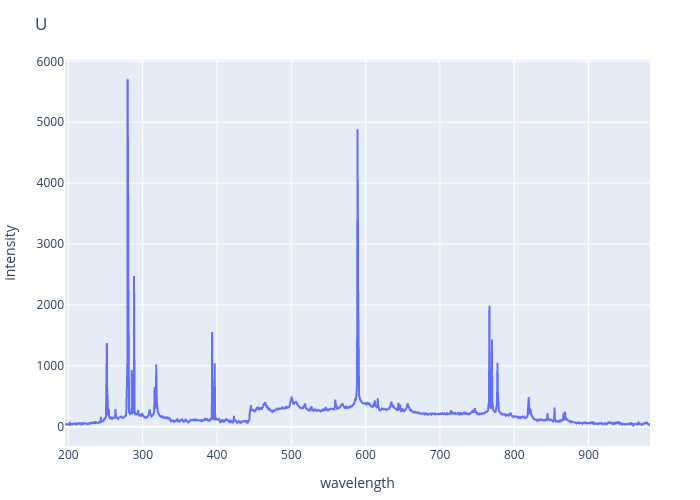
The experimental spectra shown here are a continuum removed 99%-quantile calculated over multiple measurements shown in a logarithmic scale. Processed spectra are shown instead of raw measurement spectra for easier spotting of peaks and comparisons between the spectra, but keep in mind these are as such not fully realistic spectra. Detailed process is visible in the elemental analysis notebook in appendix A2.
Theoretical spectra are calculated according to our theoretical spactrum model explained in chapter on LIBS spectrum modelling and shown in theoretical element spectra notebook
Line graphs on the web version by clicking where you can inspect or download individual spectra and the full raw measurement dataset is available at LIBS datasets.
1 H Hydrogen, 2 He Helium, 3 Li Lithium, 4 Be Beryllium, 5 B Boron, 6 C Carbon, 7 N Nitrogen, 8 O Oxygen, 9 F Fluorine, 10 Ne Neon, 11 Na Sodium, 12 Mg Magnesium, 13 Al Aluminium, 14 Si Silicon, 15 P Phosphorus, 16 S Sulphur, 17 Cl Chlorine, 18 Ar Argon, 19 K Potassium, 20 Ca Calcium, 21 Sc Scandium, 22 Ti Titanium, 23 V Vanadium, 24 Cr Chromium, 25 Mn Manganese, 26 Fe Iron, 27 Co Cobalt, 28 Ni Nickel, 29 Cu Copper, 30 Zn Zinc, 31 Ga Gallium, 32 Ge Germanium, 33 As Arsenic, 34 Se Selenium, 35 Br Bromine, 36 Kr Krypton, 37 Rb Rubidium, 38 Sr Strontium, 39 Y Yttrium, 40 Zr Zirconium, 41 Nb Niobium, 42 Mo Molybdenum, 43 Tc Technetium, 44 Ru Ruthenium, 45 Rh Rhodium, 46 Pd Palladium, 47 Ag Silver, 48 Cd Cadmium, 49 In Indium, 50 Sn Tin, 51 Sb Antimony, 52 Te Tellurium, 53 I Iodine, 54 Xe Xenon, 55 Cs Caesium, 56 Ba Barium, 57 La Lanthanum, 58 Ce Cerium, 59 Pr Praseodymium, 60 Nd Neodymium, 61 Pm Promethium, 62 Sm Samarium, 63 Eu Europium, 64 Gd Gadolinium, 65 Tb Terbium, 66 Dy Dysprosium, 67 Ho Holmium, 68 Er Erbium, 69 Tm Thulium, 70 Yb Ytterbium, 71 Lu Lutetium, 72 Hf Hafnium, 73 Ta Tantalum, 74 W Tungsten, 75 Re Rhenium, 76 Os Osmium, 77 Ir Iridium, 78 Pt Platinum, 79 Au Gold, 80 Hg Mercury, 81 Tl Thallium, 82 Pb Lead, 83 Bi Bismuth, 84 Po Polonium, 85 At Astatine, 86 Rn Radon, 87 Fr Francium, 88 Ra Radium, 89 Ac Actinium, 90 Th Thorium, 91 Pa Protactinium, 92 U Uranium, 93 Np Neptunium, 94 Pu Plutonium, 95 Am Americium, 96 Cm Curium, 97 Bk Berkelium, 98 Cf Californium, 99 Es Einsteinium, 100 Fm Fermium, 101 Md Mendelevium, 102 No Nobelium, 103 Lr Lawrencium, 104 Rf Rutherfordium, 105 Db Dubnium, 106 Sg Seaborgium, 107 Bh Bohrium, 108 Hs Hassium, 109 Mt Meitnerium, 110 Ds Darmstadtium, 111 Rg Roentgenium, 112 Cn Copernicium, 113 Nh Nihonium, 114 Fl Flerovium, 115 Mc Moscovium, 116 Lv Livermorium, 117 Ts Tennessine, 118 Og Oganesson
Note: Click on a spectrum to open an interactive version or to download single spectrum data!
1 H Hydrogen

2 He Helium

3 Li Lithium

4 Be Beryllium

5 B Boron

6 C Carbon
Carbon has C2 and CN molecular bands visible here. Note that the theoretical spectrum here includes only the element spectrum part.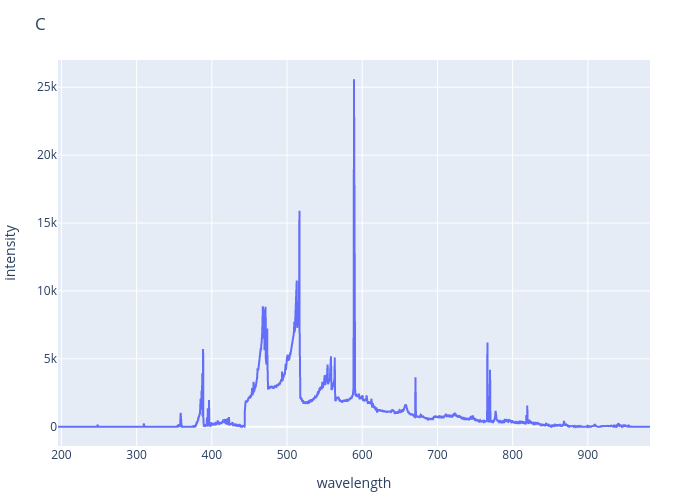

7 N Nitrogen
8 O Oxygen
9 F Fluorine
10 Ne Neon
11 Na Sodium
12 Mg Magnesium
13 Al Aluminium
Two samples for aluminium Aluminium sample 1 out of 2.
 Aluminium sample 2 out of 2. There are small molecular AlO vibrations peaks visible around 480-520nm.
14 Si Silicon
15 P Phosphorus
16 S Sulphur
17 Cl Chlorine
18 Ar Argon
19 K Potassium
20 Ca Calcium
21 Sc Scandium
22 Ti Titanium
UV side(200-443nm) spectrometer was out of focus during measurement so the spectrum isn't good. Many peaks are still visible after rescaling.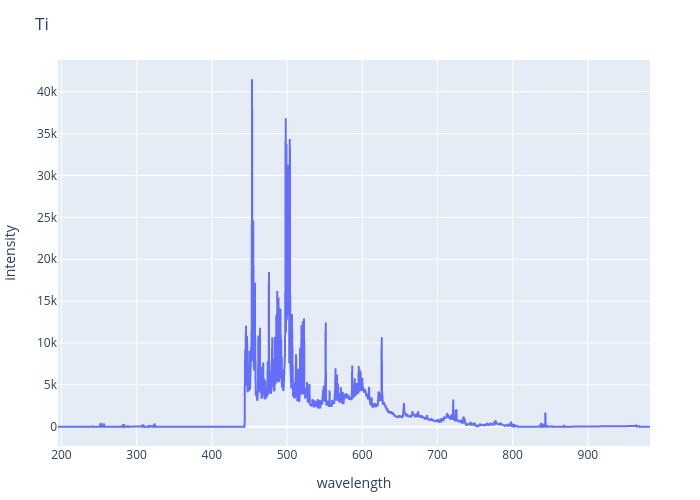
23 V Vanadium
24 Cr Chromium
25 Mn Manganese
26 Fe Iron
27 Co Cobalt
28 Ni Nickel
29 Cu Copper
30 Zn Zinc
31 Ga Gallium
32 Ge Germanium
33 As Arsenic
34 Se Selenium
35 Br Bromine
36 Kr Krypton
37 Rb Rubidium
38 Sr Strontium
39 Y Yttrium
Check also separate REE page. 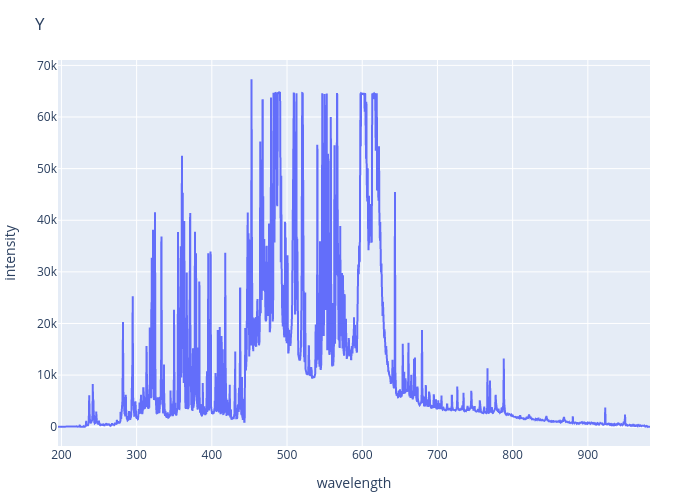
40 Zr Zirconium
41 Nb Niobium
42 Mo Molybdenum
43 Tc Technetium
44 Ru Ruthenium
45 Rh Rhodium
46 Pd Palladium
47 Ag Silver
48 Cd Cadmium
49 In Indium
50 Sn Tin
51 Sb Antimony
52 Te Tellurium
53 I Iodine
54 Xe Xenon
55 Cs Caesium
56 Ba Barium
57 La Lanthanum
Note: spectrum extracted from a glass melt i.e. this is not pure element measurement. Check separate REE page. 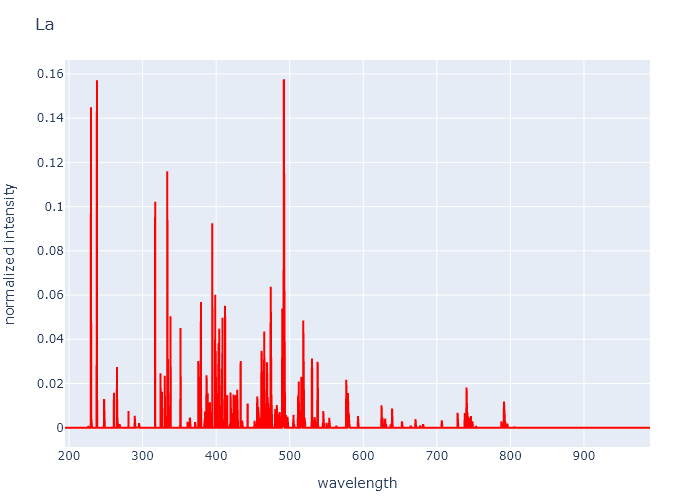
58 Ce Cerium
Note: spectrum extracted from a glass melt i.e. this is not pure element measurement. Check separate REE page. 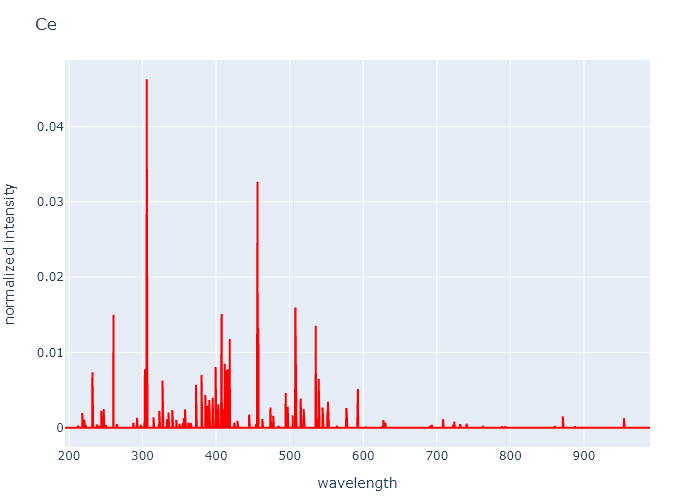
59 Pr Praseodymium
Note: spectrum extracted from a glass melt i.e. this is not pure element measurement. Check separate REE page. 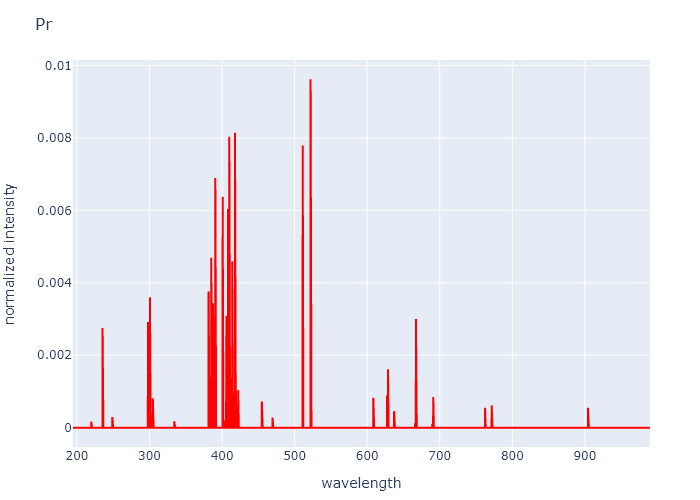
60 Nd Neodymium
Note: spectrum extracted from a glass melt i.e. this is not pure element measurement. Check separate REE page. 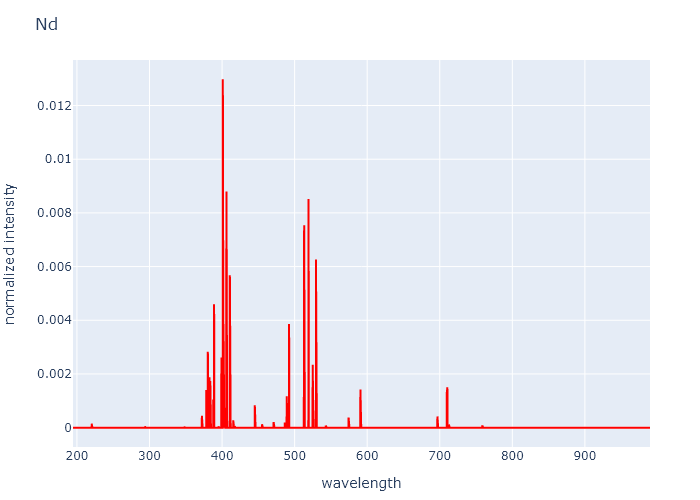
61 Pm Promethium
62 Sm Samarium
Note: spectrum extracted from a glass melt i.e. this is not pure element measurement. Check separate REE page. 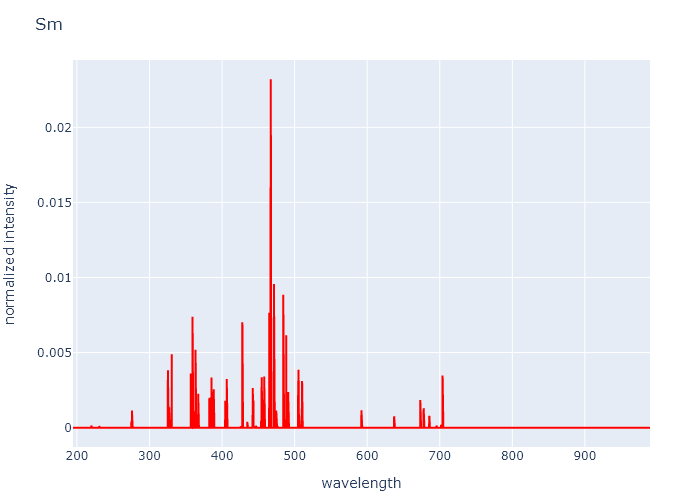
63 Eu Europium
Note: spectrum extracted from a glass melt i.e. this is not pure element measurement. Check separate REE page. 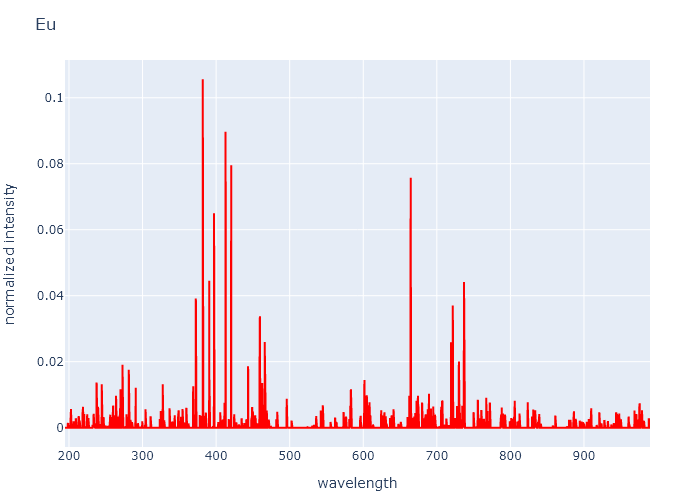
64 Gd Gadolinium
Note: spectrum extracted from a glass melt i.e. this is not pure element measurement. Check separate REE page. 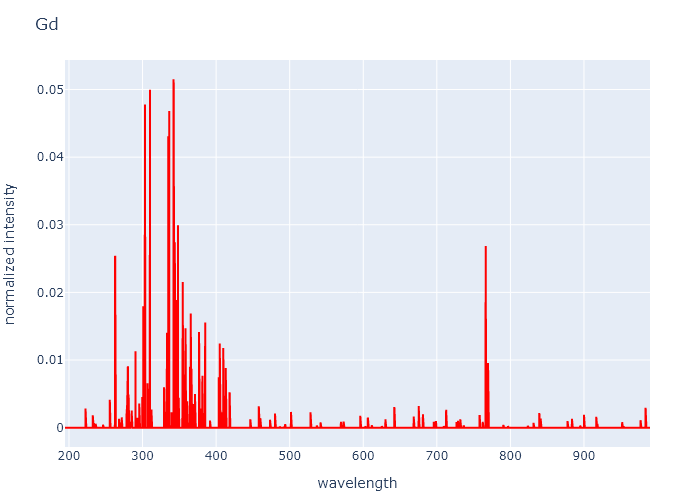
65 Tb Terbium
Note: spectrum extracted from a glass melt i.e. this is not pure element measurement. Check separate REE page. 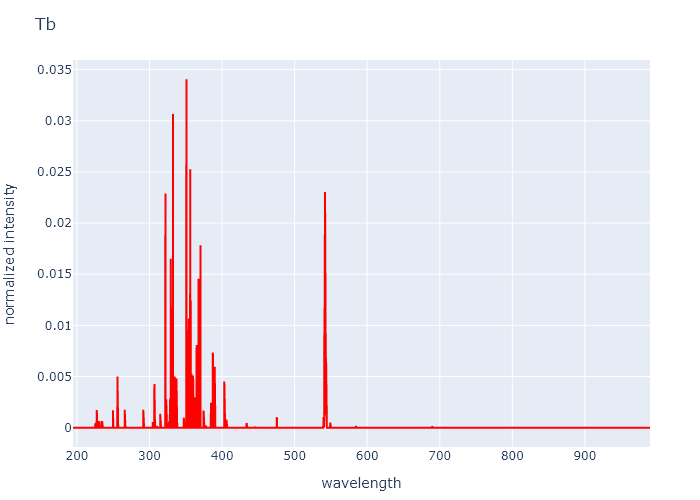
66 Dy Dysprosium
Note: spectrum extracted from a glass melt i.e. this is not pure element measurement. Check separate REE page. 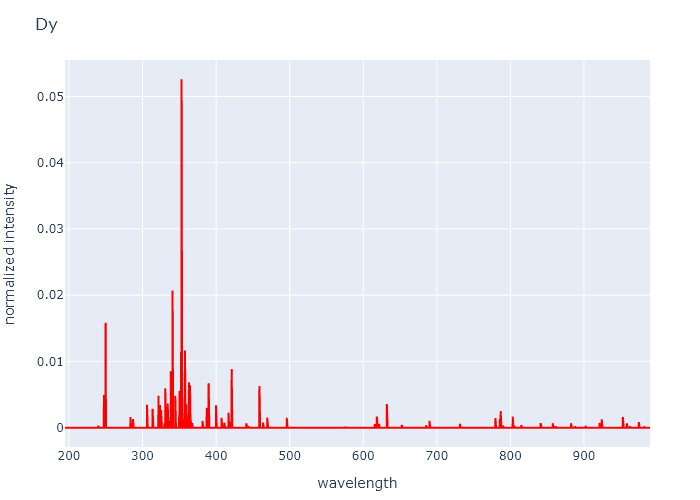
67 Ho Holmium
Note: spectrum extracted from a glass melt i.e. this is not pure element measurement. Check separate REE page. 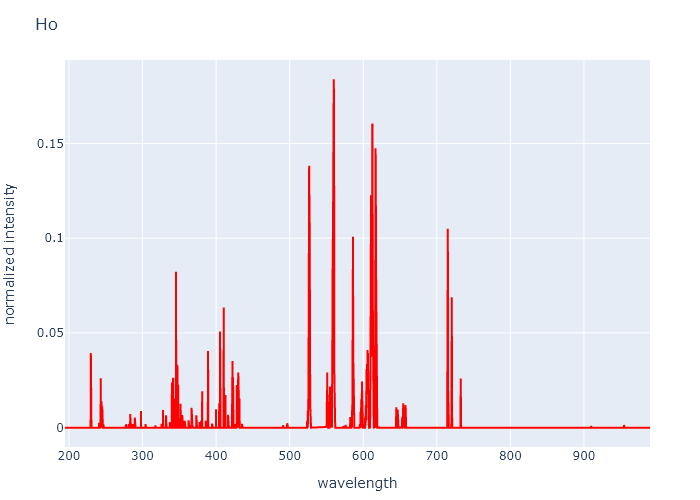
68 Er Erbium
Note: spectrum extracted from a glass melt i.e. this is not pure element measurement. Check separate REE page. 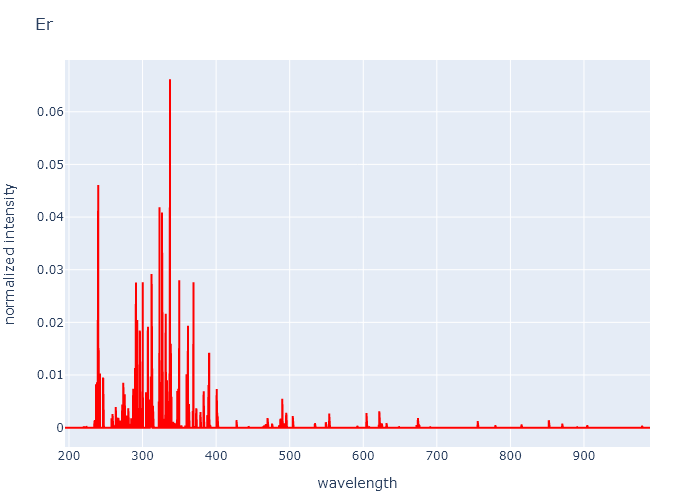
69 Tm Thulium
Note: spectrum extracted from a glass melt i.e. this is not pure element measurement. Check separate REE page. 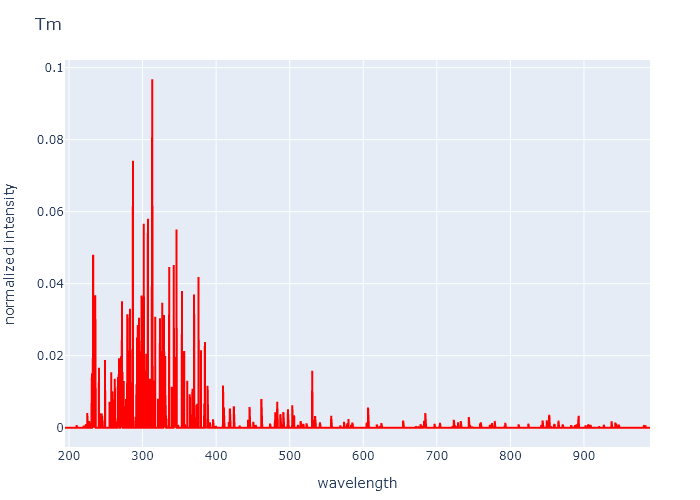
70 Yb Ytterbium
Note: spectrum extracted from a glass melt i.e. this is not pure element measurement. Check separate REE page. 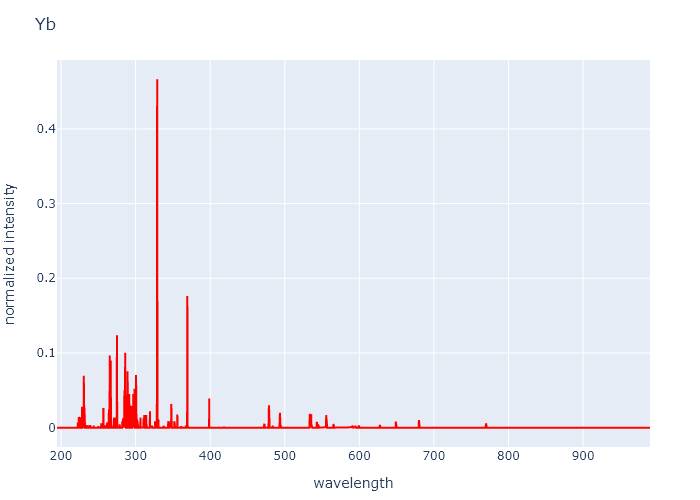
71 Lu Lutetium
Note: spectrum extracted from a glass melt i.e. this is not pure element measurement. Check separate REE page. 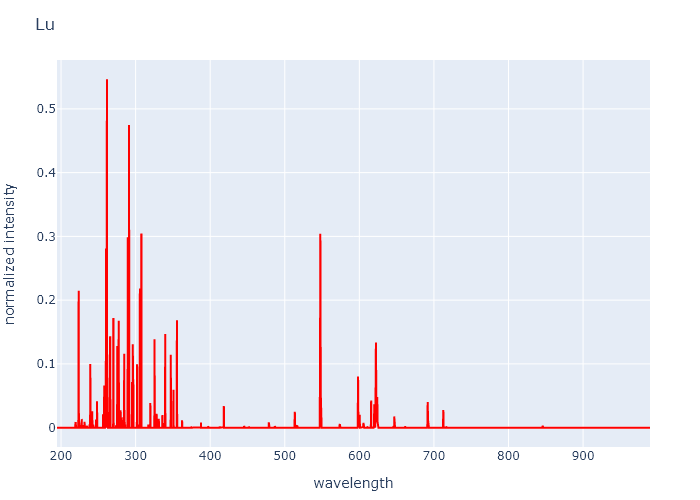
72 Hf Hafnium
73 Ta Tantalum
74 W Tungsten
75 Re Rhenium
76 Os Osmium
77 Ir Iridium
78 Pt Platinum
79 Au Gold
80 Hg Mercury
81 Tl Thallium
82 Pb Lead
83 Bi Bismuth
84 Po Polonium
85 At Astatine
86 Rn Radon
87 Fr Francium
88 Ra Radium
89 Ac Actinium
90 Th Thorium
91 Pa Protactinium
92 U Uranium
This is a bad measurement that seems to show mostly sodium, which would be from dust contamination. Some uranium peaks might be visible so I keep the result here for now until I get better. With U we got only a small number of somewhat successful measurements so this spectrum is not as good quality and the image here is 99%-percentile quantile to make peaks visible.
93 Np Neptunium
94 Pu Plutonium
95 Am Americium
Note that elements from 95 americium forward do not occur naturally and are artificially made.